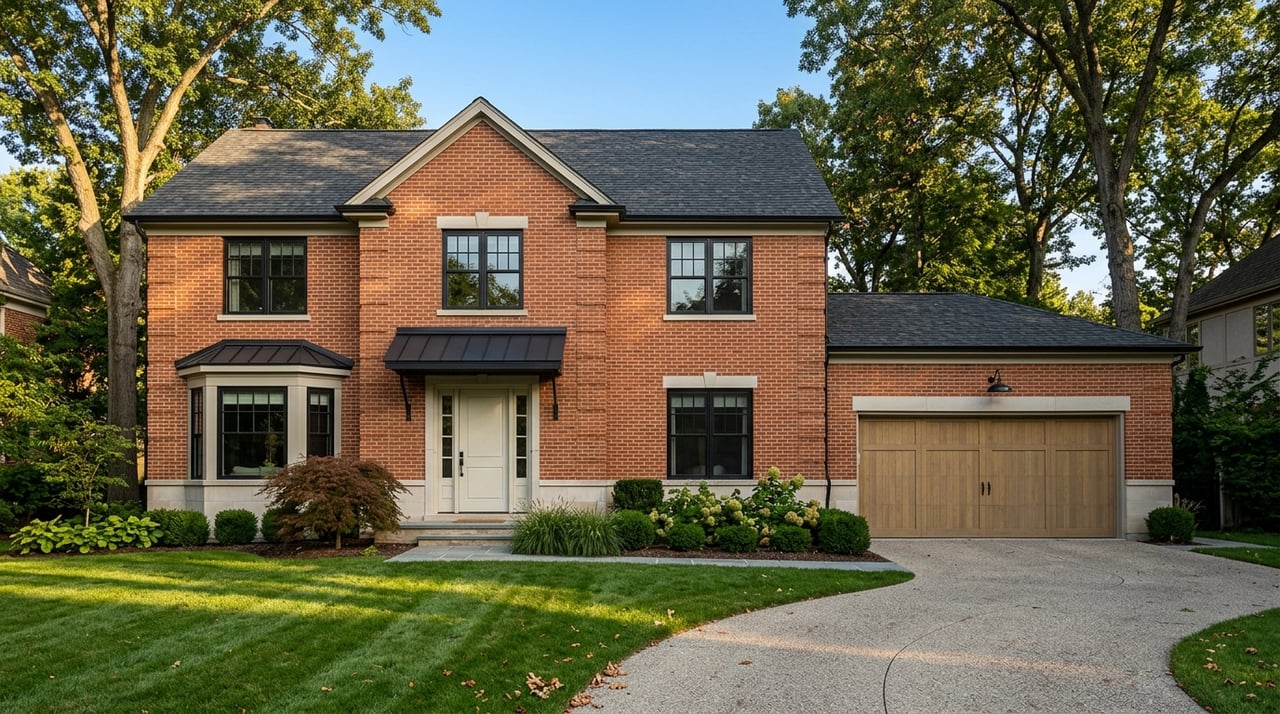
Wondering if Bloomfield Township is the right place for your next step up? If you are looking for more square footage, a larger lot, or a home that better fits how you live now, this market gives you several ways to level up without leaving Oakland County. Here’s what to know about pricing, lot size, commute routes, and property details so you can shop with more confidence. Let’s dive in.
Why move-up buyers consider Bloomfield Township
Bloomfield Township has the profile many move-up buyers are looking for: established neighborhoods, a mostly residential setting, and a wide range of home styles. The township reports that about 95% of its land is residential, and the community includes rolling roads, mature trees, and many lakes.
It is also a deeply owner-occupied market. Census QuickFacts reports an owner-occupied housing rate of 87.9%, which supports the feel of a long-established residential community rather than a heavily transient one.
For many buyers, the appeal is practical as much as visual. You can often find larger lots, older established subdivisions, and access to major Oakland County corridors without moving to a far outer suburb.
What the housing stock looks like
A big part of Bloomfield Township’s appeal is variety. The township describes housing choices that range from large estates to more modest homes, and its master plan notes that condos and townhouses also play a role in the market.
Most of the housing stock was built during major growth starting in the 1950s. That means you may see classic subdivisions, winding roads in western lake areas, homes on larger parcels, and streets where newer construction has replaced older houses.
This matters if your move-up goal is specific. In Bloomfield Township, “bigger home” can mean a larger resale, a home with more land, or a property with long-term rebuild potential.
Lot size matters more here
If lot size is one of your top reasons for moving up, Bloomfield Township is worth a close look. The zoning ordinance shows relatively generous minimum lot sizes in one-family residential districts, with minimums ranging from 16,000 square feet to 30,000 square feet depending on district and sewer service.
Minimum lot widths are also substantial. Depending on zoning district, widths generally range from 100 to 150 feet in R-1, 120 to 150 feet in R-2, and 130 to 150 feet in R-3.
Typical setbacks add to that sense of space. The township FAQ notes that R-1 through R-3 parcels generally use 40-foot front setbacks, 35-foot rear setbacks, and 16-foot side setbacks.
Why deed restrictions and HOAs matter
This is one of the most important details for move-up buyers who are thinking ahead. The township makes clear that subdivision deed restrictions are privately regulated and can be more restrictive than township zoning.
That means a property may technically meet township zoning rules but still face tighter private limits on additions, fences, pools, rebuild plans, or other exterior changes. If you are buying with a future renovation in mind, you will want to verify both zoning and any private restrictions before you commit.
The township master plan also notes there are more than 100 homeowner associations. In practical terms, neighborhood-level rules can vary from one area to the next, even when homes look similar on paper.
A rebuild market as well as a resale market
Some move-up buyers want a turnkey home. Others are thinking one step further ahead and want a property they can renovate heavily or rebuild over time.
Bloomfield Township can fit both paths. The master plan says a common development pattern is demolishing existing homes and building larger homes, sometimes across one or more lots.
That does not mean every street is changing fast. It does mean you should look carefully at the pattern around any home you are considering. One block may feel very stable and consistent, while another may have a visible mix of original homes, updated resales, and recent custom construction.
Price ranges are broader than many buyers expect
Bloomfield Township is not a one-price market. Realtor.com’s March 2026 data shows 222 homes for sale, a median listing price of $775,000, a median price per square foot of $279, and median days on market of 33.
That median gives you a useful starting point, but it does not tell the whole story. Current ZIP-level median listing prices in the township range from about $550,000 to about $1.30 million, depending on area.
For move-up buyers, it helps to think in bands:
- Around the mid-$700,000s: the township-wide middle of the market
- High-$800,000s to low-$900,000s: stronger submarkets where pricing pushes higher
- Above $1 million: upper-tier and estate-level options
This spread is one reason Bloomfield Township appeals to different kinds of move-up buyers. You may be able to trade up in size, lot, condition, or location, but not always all four at once.
Balanced conditions can help you compare better
Realtor.com currently classifies Bloomfield Township as a balanced market, with a 100% sale-to-list ratio. That is useful for buyers because it suggests you may have room to compare options more carefully than in a fast-moving, overheated market.
Instead of focusing only on list price, you can spend more energy on the factors that really affect long-term satisfaction. In this township, that often means lot size, neighborhood layout, school district assignment, home condition, and whether the street is mostly stable resale or seeing more rebuild activity.
Commute access is a key advantage
For many move-up buyers, more space only works if the location still supports daily life. Bloomfield Township has strong regional access through major routes including I-75, Telegraph Road, Woodward Avenue, Maple Road, Long Lake Road, and parts of Square Lake Road and Big Beaver Road.
The township transportation plan identifies I-75, Telegraph, Square Lake, and Woodward among the busiest corridors. It also notes SMART transit routes along Maple, Telegraph, Woodward, and the Opdyke/Adams border area.
Census QuickFacts reports a mean travel time to work of 24.1 minutes. That helps reinforce the idea that Bloomfield Township offers a residential setting with practical regional access, not an isolated fringe commute.
School district checks should happen early
One of the biggest mistakes buyers can make here is assuming the school district based on a mailing address or general area. Bloomfield Township states that properties may be served by Bloomfield Hills Public Schools, Birmingham Public Schools, Pontiac Public Schools, or Avondale Public Schools.
The township also says its district map is for reference only. That means address-level confirmation matters.
If school assignment is part of your decision, verify it early in the process for each property you seriously consider. In a township with multiple possible districts, this can affect your shortlist quickly.
How to narrow your home search
When you are moving up, it helps to define what “better” really means before you tour too many homes. In Bloomfield Township, buyers often do best when they rank their priorities instead of treating every feature equally.
Start with these questions:
- Do you want more interior space, more yard space, or both?
- Is your ideal setting an older subdivision, a lake-area pocket, or a street with newer custom homes?
- Are you open to renovation, or do you want a move-in-ready property?
- Which commute corridor matters most to your household?
- Do you need to confirm a specific school district for each address?
Getting clear on those answers can save time and help you compare homes more realistically.
A smart move-up strategy for Bloomfield Township
A good move-up plan here is not just about finding a prettier house. It is about matching your budget to the right submarket, understanding the lot and restrictions, and spotting whether a property fits your life now and later.
In some cases, the best fit is a well-kept resale in an established neighborhood. In others, it may be an older home on a strong parcel where the long-term value is in the lot, location, and future flexibility.
That is where local guidance really matters. In a market with multiple price bands, mixed housing patterns, and address-specific school assignments, details can shape the value of a home as much as square footage does.
If you are planning your next move in Bloomfield Township, working with a local expert can help you sort through the trade-offs and move with a clearer strategy. Reach out to Paul Wolfert for guidance tailored to your goals.
FAQs
What price range should you expect for Bloomfield Township homes?
- Realtor.com’s March 2026 data shows a township median listing price of $775,000, with ZIP-level medians ranging from about $550,000 to about $1.30 million.
What lot sizes are common in Bloomfield Township residential areas?
- In one-family residential districts, township zoning shows minimum lot areas ranging from 16,000 to 30,000 square feet, depending on zoning district and sewer service.
What should you check before planning an addition in Bloomfield Township?
- You should check both township zoning and any subdivision deed restrictions or HOA rules, because the township says private restrictions can be more limiting than zoning.
What school districts serve Bloomfield Township addresses?
- Township materials say properties may be served by Bloomfield Hills Public Schools, Birmingham Public Schools, Pontiac Public Schools, or Avondale Public Schools, and each address should be confirmed individually.
What commute routes are most important in Bloomfield Township?
- The township transportation plan highlights I-75, Telegraph Road, Woodward Avenue, Maple Road, Long Lake Road, and parts of Square Lake Road and Big Beaver Road as major corridors.
Is Bloomfield Township mainly a resale market or a rebuild market?
- It can be both, since the township master plan notes older established housing patterns as well as a common trend of demolishing existing homes and building larger new homes.
