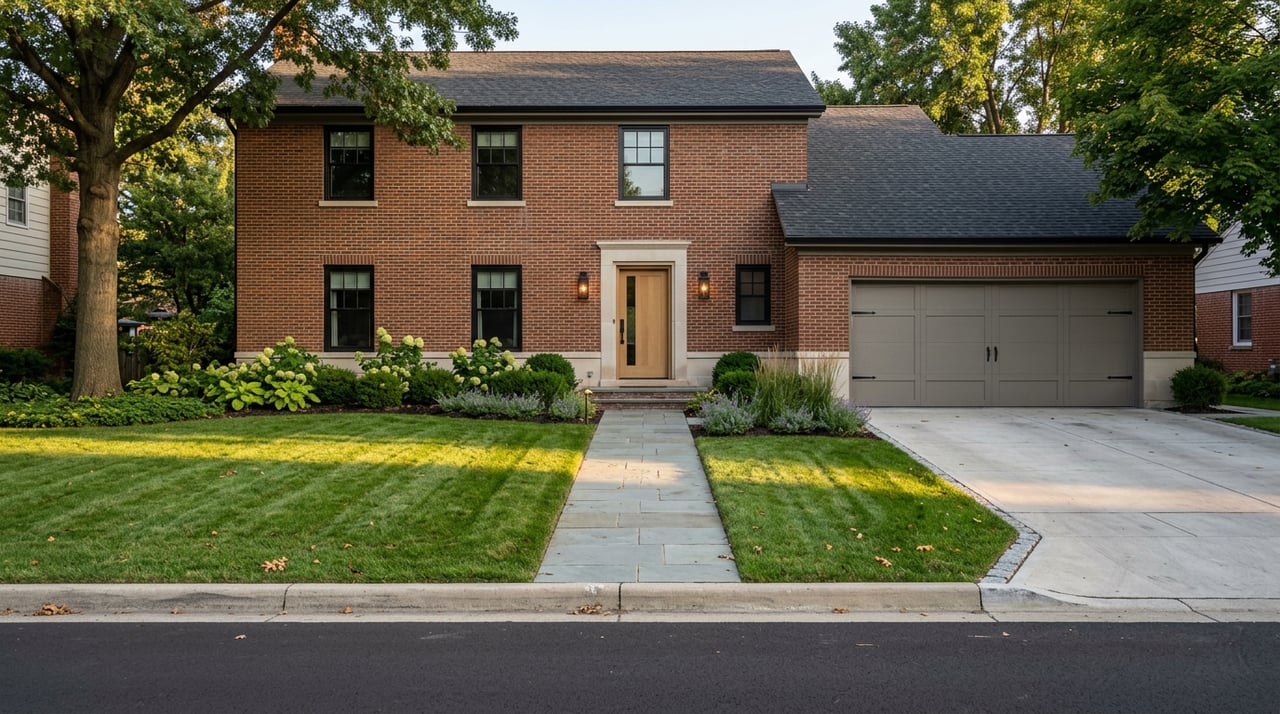
Thinking about trading your Royal Oak or Birmingham walkability for more space, privacy, and a bigger yard in Bloomfield Township? You’re not alone. Many homeowners consider a move-up to Bloomfield for its single-family neighborhoods and lifestyle upgrades, then wonder how commute time, costs, and timing will shake out. This guide gives you a clear plan to size the tradeoffs, test your commute, map financing options, and line up the sale of your current home with your purchase in Bloomfield Township. Let’s dive in.
Bloomfield Township vs. West Bloomfield
Before you start touring, get your areas straight. Bloomfield Township is a separate municipality from West Bloomfield Township, and they differ in housing stock, price ranges, and amenities. If you’re targeting Bloomfield Township specifically, confirm the township on every listing and tax record to avoid confusion. For background on Bloomfield Township’s geography and governance, see the overview on the community’s Wikipedia page.
West Bloomfield sits to the northwest and is known for its lakes, parks, and trail system that draw many move-up buyers. Explore the township’s recreation options through West Bloomfield Parks to understand why lake-adjacent neighborhoods often command premiums. This article focuses on planning a move to Bloomfield Township, with West Bloomfield noted as a close alternative.
Market snapshot and price expectations
If you’re moving up from closer-in suburbs like Royal Oak or Ferndale, expect a step up in purchase price when you focus on Bloomfield-area homes. Recent local market reports have placed Bloomfield Township medians in the high $500,000s to $700,000 range depending on ZIP code and property type, while nearby West Bloomfield has shown a wide range that often starts in the mid $400,000s and extends higher in lake neighborhoods. Exact numbers shift month to month, and ZIP-level medians can differ from township-wide figures. Plan to check current medians by ZIP and have your agent update them quarterly so your budget stays aligned with the market.
In today’s conditions, days on market and closing timelines matter for your sequencing plan. Typical financed transactions run roughly 30 to 45 days from offer acceptance to closing, and the full list-to-close window often spans several weeks depending on contingencies and lender timelines. For national timing context, review HomeLight’s explainer on how long a home sale usually takes (industry averages and steps).
Walkability and lifestyle tradeoffs
Royal Oak and Ferndale offer higher walkability, with restaurants, coffee, and retail clustered near neighborhoods. Walk Score places Royal Oak at a notably walkable level (see the Royal Oak Walk Score), and Ferndale posts a similar or higher number. By contrast, Bloomfield-area neighborhoods are more car-dependent, with quieter streets, larger lots, and fewer traditional downtown blocks. The common trade here is predictable: you give up some walkable convenience to gain space, privacy, and yard.
To get clear on your must-haves, make two short lists:
- Nonnegotiables: target commute time, minimum bedroom and bath count, dedicated office space, yard size, garage capacity, and preferred lot features.
- Nice-to-haves: finished basement, updated kitchen, outdoor living, lake proximity, trail access, and guest parking.
Use your list every time you tour so you don’t drift away from what matters most to your household.
Commute reality check: test before you buy
Average commute times for Bloomfield-area households tend to sit in the mid 20-minute range, though this varies by employer location and time of day. As a baseline reference, scan the U.S. Census QuickFacts for Bloomfield charter township to understand broader travel-time patterns (ACS context). What matters most is your specific route.
How to test your commute in 3 drives
Do this for each likely workplace or school run:
- AM peak: Drive from the target neighborhood to your workplace at your actual departure time.
- PM peak: Return trip at your normal evening departure.
- Midday: Run the same route outside peak to capture off-peak variability.
Repeat during poor weather if possible. Convert time into annual impact: minutes per trip × 2 × 5 workdays × 52 weeks. That quick math makes tradeoffs clearer when comparing homes.
Transit notes
SMART provides some regional service, but fixed-route coverage can be limited in parts of Bloomfield-area neighborhoods. If transit matters to you, check the schedule for routes like SMART 851 and any available park-and-ride or flex options near your short list. For most move-up buyers here, daily trips are primarily by car, so garage and driveway capacity should be on your priority list.
Budget, taxes, and carrying costs
A higher purchase price typically means a higher property tax bill in absolute dollars, even if the effective rate is similar to what you pay now. Oakland County’s effective property tax profile runs on the higher side versus the state average, so it pays to model your full annual costs. Use county-level context as a starting point (Oakland County tax overview), then confirm local millages and any recent voter-approved changes that affect the bill. For example, township ballot proposals can adjust parks, library, or safety-path millages over time (local millage coverage).
Round out your carrying-cost estimate with homeowners insurance, utilities, snow removal, landscaping, and potential HOA or private road fees. Larger treed lots can require seasonal maintenance, so ask about leaf management, irrigation, and tree care during showings.
Financing your move-up: 4 paths
There is no one-size approach. Pick a path that fits your cash flow, risk tolerance, and the heat of your target neighborhood.
1) Sell first
- Pros: Cleanest cash flow, no double mortgage, simpler underwriting, and easier staging while the home is vacant.
- Cons: You may need temporary housing, short-term storage, or a rent-back from your buyer.
- Best for: Balanced markets or when your current neighborhood is moving quickly. Use typical list-to-close timing as a guide (industry timing context).
2) Buy first with bridge or HELOC
- Pros: Stronger, noncontingent offers and no need for temporary housing.
- Cons: Short-term interest costs and the risk of carrying two mortgages if your current home lingers.
- Best for: Competitive segments where contingent offers struggle. For an overview of buy-before-you-sell and bridge mechanics, see Bankrate’s explainer on knock-style programs and financing tradeoffs (financing overview).
3) Contingent offer
- Pros: Lets you shop without taking on interim debt.
- Cons: Many sellers prefer noncontingent offers, and kick-out clauses can force quick decisions. If you use this route, tighten your contingency timelines and show strong pre-approval.
4) iBuyer or guaranteed-sale program
- Pros: Predictable timing and fewer showings.
- Cons: Lower pricing power and program fees. Consider this when certainty beats top-dollar goals.
Contract and closing coordination
Once you’re under contract, most financed purchases take about 30 to 45 days to close, depending on appraisal and underwriting. If you need extra time after closing to move out, negotiate occupancy or a rent-back with a daily rate and security deposit written into the agreement. Your agent will use your lender’s target dates to align inspections, appraisal, and closing for both transactions.
What to look for on every Bloomfield tour
Use this fast checklist to stay focused when you swap walkability for more space and yard:
- Commute and car needs: measured commute time, garage capacity, driveway snow storage, and guest parking.
- Lot and privacy: lot size, tree cover, drainage patterns, and usable yard area for play or outdoor living.
- Utilities and services: sewer vs. septic, municipal vs. well water, HOA or private road responsibilities, and snow removal plans.
- Schools: confirm the exact school assignment for the property and review district program offerings if they matter to your household. Boundaries vary across Bloomfield Township and neighboring areas.
- Amenities: proximity to township parks, trail access, and nearby cultural resources that fit your lifestyle.
When you need parcel-specific answers or to confirm the jurisdiction, contact the township directly through Bloomfield Township’s resources page.
Sell your walkable home to the right buyer pool
Your Royal Oak or Ferndale home likely appeals to buyers who value location and convenience. Spotlight walkability, short commute options, and a low-maintenance yard in your marketing. Simple staging that emphasizes bright, flexible living spaces and a turnkey feel can help your home stand out. Industry data shows that coordinated prep, pricing, and marketing shorten market time and smooth the move-up sequence (timing overview).
A 12-week sample timeline for move-ups
Use this as a starting point and adapt to your lender and local market pace.
- Weeks 0 to 2: Meet your agent for a pricing and prep plan on your current home. Get pre-approved and discuss buy-first, sell-first, or bridge options. Build a clear budget and target ZIPs in Bloomfield Township.
- Weeks 2 to 4: Complete light repairs, declutter, and stage. Capture professional photos and video. Launch your listing or, if buying first, line up funds for a strong offer.
- Weeks 4 to 6: Field offers and negotiate key terms, including possible rent-back. In parallel, tour Bloomfield Township homes that match your nonnegotiables.
- Weeks 6 to 8: Go under contract on your purchase. Order inspections and appraisal. Align closing dates with your sale.
- Weeks 8 to 10: Final loan underwriting. Confirm movers, utilities, and insurance for the new home.
- Weeks 10 to 12: Close on both homes. Complete any rent-back or occupancy arrangements. Move in and enjoy your new space.
Local details to verify before you write an offer
A few checks before you commit will save time and stress later.
- Township and taxes: Confirm whether the home is in Bloomfield Township or West Bloomfield and verify the parcel on the township site (Bloomfield resources). Model your annual property tax using county context, then confirm current millages and any recent ballot changes that affect the bill (millage example coverage).
- Commute and roads: Run the 3-drive test and check for planned road work that could affect your route. Regional agencies publish construction plans that may shift travel times over a season.
- Transit access: If bus service matters, confirm stop locations and headways for routes such as SMART 851 near your short list.
- Price context: Have your agent pull ZIP-level medians and days on market for the exact neighborhood, then update quarterly so you stay current.
Ready to make your move?
A successful move-up to Bloomfield Township is a series of small, smart decisions: test your commute, build a realistic budget, pick the right financing path, and sequence your sale and purchase with care. If you want help mapping the steps and maximizing the value of your closer-in home with video-first marketing, reach out. You’ll get a clear valuation, a tactical move-up plan, and on-the-ground guidance for Bloomfield Township neighborhoods. Connect with Paul Wolfert to get your free home valuation and a customized marketing plan.
FAQs
How different is Bloomfield Township from West Bloomfield for homebuyers?
- They are separate townships with different amenities and housing profiles. Bloomfield Township skews toward single-family neighborhoods with larger lots, while West Bloomfield features many lakes and township parks that shape pricing and lifestyle options (parks overview).
How much longer will my commute be if I move from Ferndale or Royal Oak to Bloomfield Township?
- Averages in Bloomfield Township sit around the mid-20-minute range in ACS data, but your real-world time depends on your route and peak travel. Use the 3-drive test and the ACS reference for context (QuickFacts baseline).
What walkability tradeoffs should I expect when moving from a closer-in suburb?
- Royal Oak and Ferndale score higher for walkability, with more daily needs within a short walk (Royal Oak Walk Score). In Bloomfield Township, plan for more driving but enjoy larger lots, quieter streets, and more private outdoor space.
Which financing approach works best for a competitive Bloomfield Township offer?
- Many buyers prefer buy-first with bridge or HELOC funds to present a stronger, noncontingent offer. It carries short-term cost and qualification requirements, so review pros and cons with your lender and see consumer explainers for an overview of buy-before-you-sell options (financing overview).
How long does it usually take to sell and then buy?
- Many markets see roughly 30 to 45 days from offer acceptance to closing on financed deals, with the full list-to-close timeline often stretching several weeks. Plan for a 12-week move-up sequence to coordinate prep, listing, and both closings (timing context).
How should I estimate property taxes when moving up in price?
- Start with Oakland County’s effective tax context to understand the baseline, then confirm your specific township millages and any recent voter-approved changes that affect the annual bill (county overview and local millage coverage).
