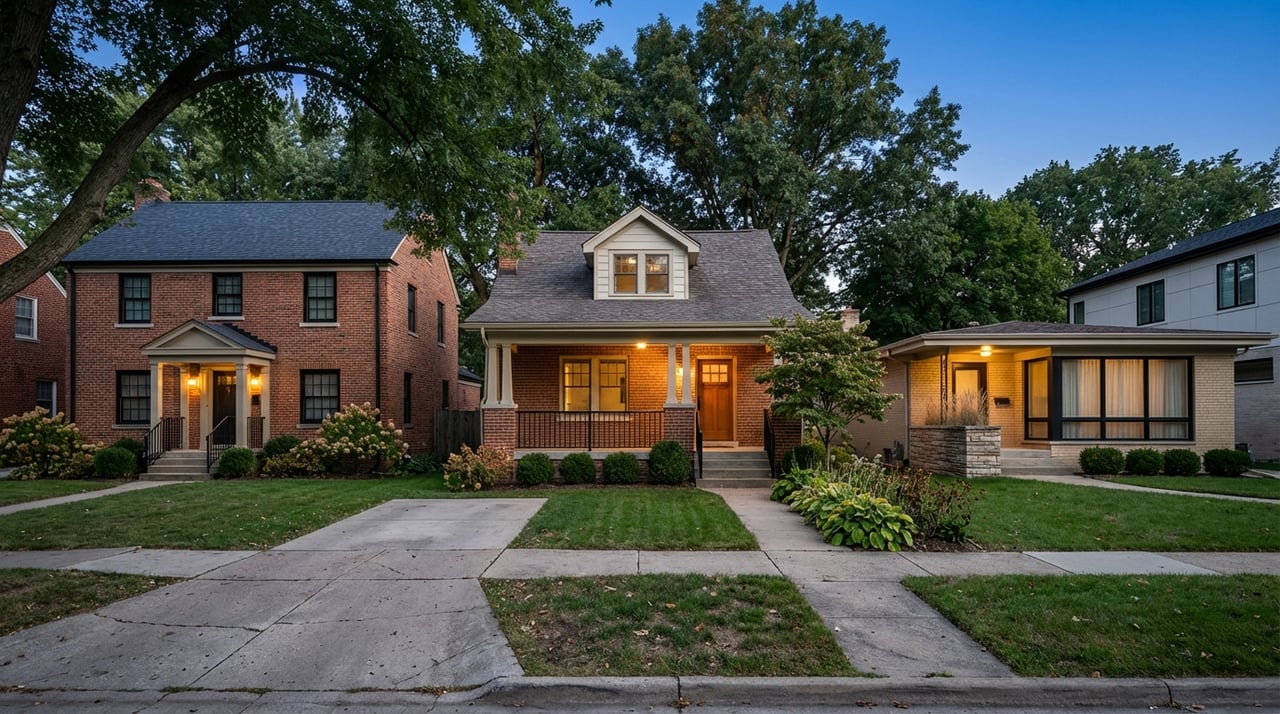
Trying to make sense of why some Royal Oak blocks feel buzzy and urban while others are quiet and leafy? If you’re weighing a front‑porch bungalow against a modern infill home, you’re not alone. In this guide, you’ll learn how to read the architecture, understand each neighborhood’s vibe, and match it to your routine and budget. Let’s dive in.
Royal Oak at a glance
Royal Oak is an established inner‑ring suburb just north of Detroit with a lively, walkable downtown anchored by Main Street and Washington Avenue. The city’s own guide highlights a dense core with restaurants, entertainment, and frequent events that shape daily life downtown. You can explore that downtown pulse on the city’s Reside page for an overview of amenities and lifestyle options (City of Royal Oak).
Walkability shifts block by block. Downtown addresses post Walk Scores in the 90s, while many single‑family areas are more car‑oriented, which creates sharp contrasts within a short distance (Walk Score: Royal Oak). As context for the housing stock, the median year built is around 1950, the median lot size is near 6,500 square feet, and recent single‑family sale prices in summaries often land in the low to mid $300k range (Homes.com market guide; Homes.com local guide).
Spot the home styles
Bungalows and Craftsman bungalows
Bungalows often show a low profile, wide covered porches, and exposed rafter tails, with compact 1 to 1.5‑story floor plans. They line many older streets close to downtown, especially near early 20th‑century subdivisions with mature trees and a front‑porch social feel. Expect character and walkability, but plan for smaller primary suites and the possibility of updating older mechanicals and insulation (NPS on Bungalows).
Classic brick Colonials
Colonial Revival homes tend to have symmetrical fronts, brick exteriors, and formal entries. In Royal Oak, you’ll see them on established streets and traditional subdivisions, often with second‑story bedroom layouts that appeal to move‑up buyers. They deliver curb appeal and structure, but you’ll want to balance preserving original details with any plans to open up the floor plan (NPS on Colonial Revival).
Mid‑century ranch and split‑level
Ranch and split‑level homes spread across mid‑century tracts in Royal Oak, especially north and west of downtown. Layouts are practical, often with attached garages and larger single‑level footprints. Typical projects include upgrading original windows, modernizing mechanicals, and reworking kitchens for more open flow.
New construction and infill (plus townhomes)
In recent years, tear‑downs and infill builds have added modern floor plans, larger primary suites, and low‑maintenance finishes. Communities like Normandy Oaks showcase new single‑family homes and townhomes that deliver contemporary systems and builder warranties with a Royal Oak address (Normandy Oaks by Robertson Homes). Tradeoffs often include smaller yards and HOA rules for townhome buyers, offset by open layouts, attached garages, and less immediate renovation.
Downtown lofts and condos
Main Street and the immediate downtown offer loft‑style condos and mixed‑use buildings that emphasize walkability and easy access to dining and entertainment. These homes lower maintenance and maximize lifestyle convenience, with HOA dues as the main ongoing cost factor. If you want to trade yard work for a short walk to everything, this is a strong fit.
Neighborhood feel by pocket
Downtown Royal Oak corridor
- Feel: lively, dense, and pedestrian‑oriented with ground‑floor restaurants, entertainment, and frequent public events that create an urban stroll. The city outlines these amenities and programs on its Reside pages (City of Royal Oak).
- Housing: condo/loft units and small clusters of older bungalows and colonials just outside the core.
- Fit: great if you want errands and nights out within a short walk. Expect weekend energy and limited private outdoor space.
Vinsetta Park and the Vinsetta Blvd corridor
- Feel: leafy boulevards, classic architecture, and quiet local streets with a porch culture, all within a quick drive or bike ride to downtown.
- Housing: bungalows, Tudor and Colonial revivals, and some larger period brick homes on roomier lots.
- Fit: ideal if you value a traditional block feel, character, and space to expand.
Northwood, Woodwardside, and early subdivisions
- Feel: tree‑lined streets with a suburban rhythm, close to parks and a short hop to downtown amenities.
- Housing: a mix of two‑story colonials and post‑war ranches; many lots provide more yard than the closest‑in blocks.
- Fit: strong for move‑up buyers who want interior space, a yard, and quick access to main corridors.
Normandy Oaks and newer infill pockets
- Feel: modern layouts and lower‑maintenance living in new subdivisions or small infill groups while keeping a Royal Oak location.
- Housing: new single‑family homes and townhomes with contemporary systems; some communities feature builder warranties.
- Fit: best if you prefer turnkey living and minimal immediate renovation.
Woodward / Beaumont corridor and 13‑Mile area
- Feel: a practical mix of residential and institutional uses with quick access to Beaumont Hospital and major roads.
- Housing: a range from single‑family to small multifamily near the corridor.
- Fit: convenient for healthcare workers and buyers who value straightforward commuting.
Outer edges and auto‑oriented blocks
- Feel: larger blocks with more driving and fewer walkable retail clusters. Walk Scores dip as you move away from the downtown nucleus (Walk Score: Royal Oak).
- Housing: wider lot options in spots, with a quieter street pattern.
- Fit: solid if you prioritize driveway space, yards, and easy vehicle circulation.
How to choose your fit
- Love morning coffee runs and evening walks? Focus on downtown condos/lofts and close‑in bungalows near Main and Washington.
- Want a bigger yard and room to add on? Look to leafy streets in Vinsetta Park, Northwood, and mid‑century tracts.
- Prefer turnkey with modern systems? Zero in on Normandy Oaks or other newer infill communities.
Renovation and systems checklist
Older Royal Oak homes can have vintage systems. Ask for targeted inspections and budget accordingly, especially for houses built before 1960. Common items include electrical panel capacity, knob‑and‑tube or outdated wiring, insulation, HVAC age, and galvanized or cast‑iron plumbing runs (InspectApedia: older wiring basics).
If the property sits in a designated historic area, exterior changes may require review. Check the city’s Historic District Commission resources for guidance and process details (Historic District info).
Planning and the future
Royal Oak’s long‑range planning work, including Master Plan 2050, emphasizes added housing options, stronger neighborhood connections, and continued support for walkability. That helps explain ongoing infill near the core and small townhome clusters close to amenities. For context on the city’s direction, review the planning firm’s overview of the initiative (DPZ on Master Plan 2050).
Quick showing questions
- How old are the HVAC, water heater, and electrical panel?
- Where is garage access and does a rear alley serve the lot?
- Is the home inside a historic district or subject to design review for exterior changes?
- If it is a townhome or new community, what are typical HOA fees and rules?
Ready to pinpoint the right Royal Oak block for your lifestyle and budget? Reach out to Paul Wolfert for a neighborhood walk‑through, smart pricing context, and on‑the‑ground guidance. Get a Free Home Valuation & Customized Marketing Plan.
FAQs
How do Royal Oak neighborhoods differ in walkability?
- Downtown addresses post very high Walk Scores, while many single‑family areas are more car‑oriented, so your daily routine can feel very different just a few blocks apart.
What home styles are most common in Royal Oak?
- You’ll see bungalows and classic brick colonials near older, close‑in streets, mid‑century ranch and split‑level homes across wider tracts, plus pockets of new single‑family and townhomes.
Are tear‑downs and infill common?
- Yes, especially near the core, where small older homes on valuable lots are sometimes replaced with larger new builds that deliver modern layouts and systems.
What should I budget to update in an older home?
- Plan for potential electrical, plumbing, insulation, and HVAC upgrades, and get focused inspections to price likely projects before you make an offer.
