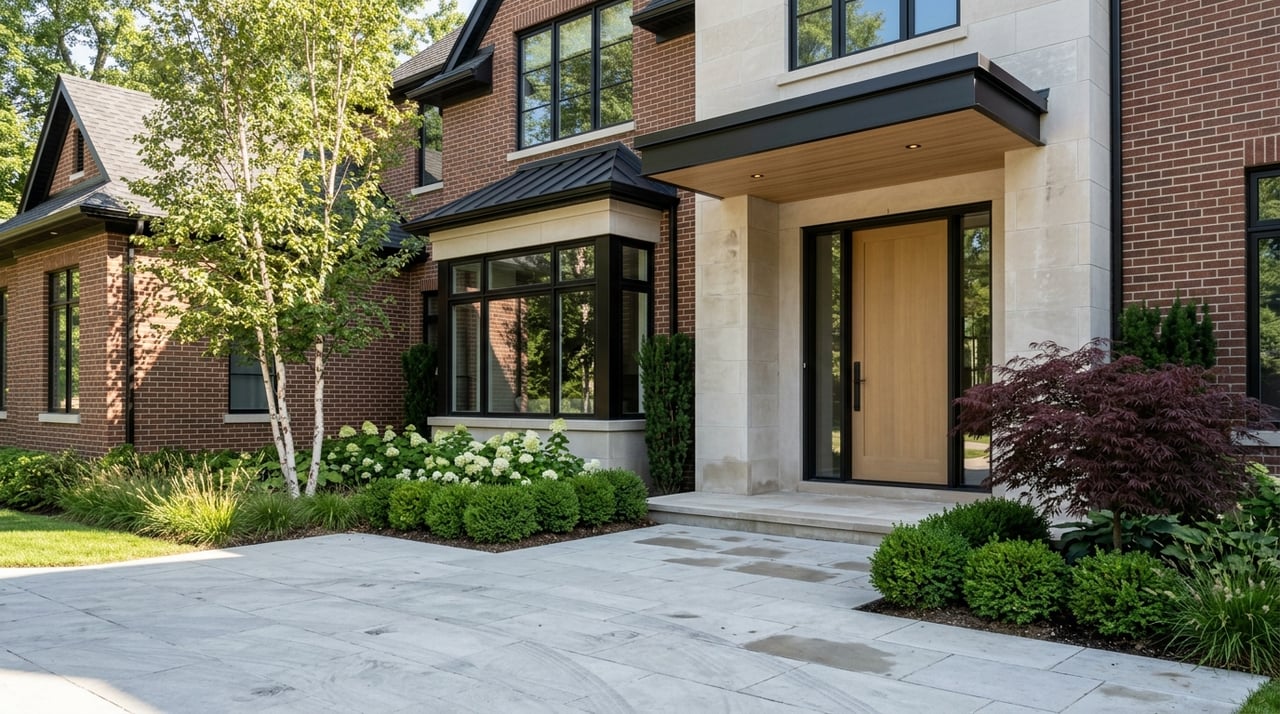
Luxury means different things in different places. In Bloomfield Hills, it is not about flashy towers or packed commercial districts. It is about space, privacy, architectural character, and a setting that feels intentionally protected. If you are trying to understand what makes this market stand out, here is what defines luxury living in Bloomfield Hills and why it continues to draw buyers who want more than just a high price point. Let’s dive in.
Luxury Starts With Privacy and Space
In Bloomfield Hills, luxury begins with how the city feels. City materials describe it as a serene suburban community with grand estates, tree-lined streets, peaceful surroundings, and limited commercial development. That creates a very different experience from a more active downtown or higher-density suburb.
For many buyers, that atmosphere is the real value. You are not just buying a house. You are buying a setting that emphasizes discretion, quiet, and room to breathe.
The numbers support that position. Data USA reports a 2024 population of about 4,420, a median household income of $189,942, a median property value of $947,900, and a homeownership rate of 85.8%. Compared with larger nearby suburbs like Troy and Farmington Hills, Bloomfield Hills feels smaller, more secluded, and more estate-oriented.
Estate Character Shapes the Market
Bloomfield Hills reads as a luxury market because the city has worked to protect that identity. The city’s master plan says its purpose is to protect the unique elements of Bloomfield Hills, guide future development, and conserve natural features so the community remains desirable. That is a big part of what separates this market from places where growth is driven by density or commercial expansion.
This planning approach helps preserve the city’s residential character. In practical terms, that means large homes, generous lots, and a consistent sense of space across the community. Buyers who value long-term character often see that kind of stewardship as a luxury feature in itself.
Architecture Adds Depth and Prestige
Luxury in Bloomfield Hills also comes from the built environment. The city is closely tied to Cranbrook, one of its most important architectural and cultural landmarks. Michigan’s historic preservation office says the Cranbrook Educational Community began as a farm estate in 1904, evolved into a major educational and cultural complex, and became a National Historic Landmark because of its integrated architecture and landscape design.
Cranbrook House and Gardens describes Cranbrook House as an English-Tudor estate and an Arts & Crafts masterpiece designed by Albert Kahn. The broader Cranbrook campus includes major art, science, and cultural institutions that give Bloomfield Hills a distinctive sense of place. That history adds more than prestige. It shapes how people think about design, landscape, and the overall identity of the community.
After World War II, Cranbrook Academy of Art also became an important center for modern design under Eliel Saarinen. As a result, Bloomfield Hills carries a mix of historic estate architecture, Tudor and Arts & Crafts traditions, and a modernist design legacy. For buyers, that gives the market a deeper architectural story than you find in many suburban communities.
Natural Beauty Is Part of the Luxury
In some markets, the home is the whole story. In Bloomfield Hills, the landscape matters just as much. The city’s welcome materials describe rolling hills and dense woodlands, while the master plan emphasizes conservation of natural features as essential to keeping the community desirable.
Bloomfield Hills is also located in the Rouge River Watershed, which the city says contains more than 400 lakes, impoundments, and ponds. That helps explain the area’s green, water-rich setting. When you combine mature trees, natural contours, and carefully maintained properties, the result feels refined without feeling overbuilt.
City code reinforces that high-stewardship environment. Lakes, ponds, rivers, streams, and creeks are treated as protected natural features, and the city requires a 25-foot setback from wetland boundaries. The city also requires exterior property and landscaping to be maintained carefully, which supports the polished, well-kept look buyers often associate with premier neighborhoods.
Lifestyle Goes Beyond the Home
A luxury address is not only about square footage. It is also about the lifestyle around you. In Bloomfield Hills, that lifestyle is strongly tied to cultural landmarks and private clubs.
Cranbrook is the city’s strongest cultural anchor. According to Cranbrook House and Gardens, the campus includes a graduate Academy of Art, a contemporary art museum, a historic house and gardens, a natural history museum, and independent college preparatory schools. That blend of architecture, art, and landscape gives the city an identity that feels both established and distinctive.
The club network adds another layer. Bloomfield Open Hunt, established in 1917 on 40 acres in Bloomfield Hills, offers riding, racquet sports, swimming, dining, social events, a full-service equestrian facility, indoor and outdoor riding arenas, and a fitness center. Bloomfield Hills Country Club, founded in 1909, offers golf, tennis, swimming pools, a fitness center, and dining options, while The Village Club focuses on cultural, social, and philanthropic opportunities along with dining.
Oakland Hills Country Club, located in Bloomfield Hills, was founded in 1916 and has hosted 18 major championships. The club says it is home to two Donald Ross-designed courses with rolling terrain and mature trees. Stonycroft Hills Club also describes itself as a member-owned private golf club in the heart of Bloomfield Hills and one of the oldest golf courses in Oakland County.
Taken together, these institutions create a lifestyle that feels heritage-driven, private, and relationship-based. That is a big part of what luxury looks like here.
Bloomfield Hills vs Nearby Suburbs
Bloomfield Hills is surrounded by well-known and well-regarded communities, so it is fair to ask what makes it different. The answer is not just price. It is scale and atmosphere.
Birmingham, Troy, and Farmington Hills are all much larger. Census QuickFacts cited in the research show Birmingham at 22,198 residents, Troy at 89,209, and Farmington Hills at 84,173. Bloomfield Hills, by contrast, is much smaller, and that smaller scale supports its more secluded, estate-like feel.
That distinction matters if you are searching for a certain kind of experience. If you want a primarily residential setting with limited commercial development, larger lots, and a stronger sense of retreat, Bloomfield Hills stands in its own category. It feels less like a busy suburb and more like a protected residential enclave.
What Buyers Often Mean by “Luxury” Here
When buyers talk about luxury in Bloomfield Hills, they are usually talking about a combination of features rather than one single trait. Price matters, but it is only part of the equation.
Here is what tends to define luxury living in this market:
- Large lots and a lower-density residential feel
- Privacy and discretion
- Estate architecture and design pedigree
- Access to cultural landmarks like Cranbrook
- Private club amenities tied to golf, equestrian life, racquet sports, dining, and social events
- A natural setting shaped by rolling hills, woodlands, lakes, and careful landscape stewardship
- A city planning approach focused on preserving character over chasing dense growth
That combination is what gives Bloomfield Hills its reputation. It is luxury expressed through permanence, setting, and lifestyle.
Why This Matters if You’re Buying or Selling
If you are buying in Bloomfield Hills, it helps to know that the premium is tied to more than finishes and square footage. You are also paying for privacy, land, architectural context, and a city that actively protects its identity. Understanding that can help you evaluate value more clearly.
If you are selling, that same point matters for marketing. A Bloomfield Hills property should be presented as part of a larger lifestyle story, not just a list of rooms and upgrades. The right strategy highlights the estate setting, the architecture, the landscape, and the broader appeal of the community to both local and out-of-market buyers.
That is especially important in a market where presentation can shape perception. Buyers at this level often respond to context, visual storytelling, and a clear explanation of what makes a property and location truly distinct.
If you are thinking about buying or selling in Bloomfield Hills, Paul Wolfert can help you position the home, the setting, and the story in a way that matches this market.
FAQs
What defines luxury living in Bloomfield Hills?
- Luxury living in Bloomfield Hills is typically defined by large lots, privacy, estate architecture, club-oriented lifestyle options, and a protected natural setting, not just home prices.
Is Bloomfield Hills more urban or suburban?
- Bloomfield Hills is primarily residential with limited commercial development, so it is best understood as secluded suburban estate living.
What makes Bloomfield Hills different from Troy or Farmington Hills?
- Bloomfield Hills is much smaller in population and has a more private, estate-like atmosphere shaped by residential character, limited commercial activity, and preservation of natural features.
Why is Cranbrook important to Bloomfield Hills?
- Cranbrook is one of the city’s defining cultural and architectural landmarks, with a National Historic Landmark campus tied to art, design, landscape, and historic estate architecture.
What types of private clubs are in Bloomfield Hills?
- Bloomfield Hills includes private clubs centered on golf, equestrian facilities, racquet sports, swimming, dining, fitness, and social or cultural activities.
Does nature play a big role in Bloomfield Hills luxury?
- Yes. The city’s rolling hills, dense woodlands, water-rich landscape, and preservation-focused planning all contribute to the area’s luxury appeal.
